
Built by Women. Built Different
Ladyship’s Panel at Cannes Lions
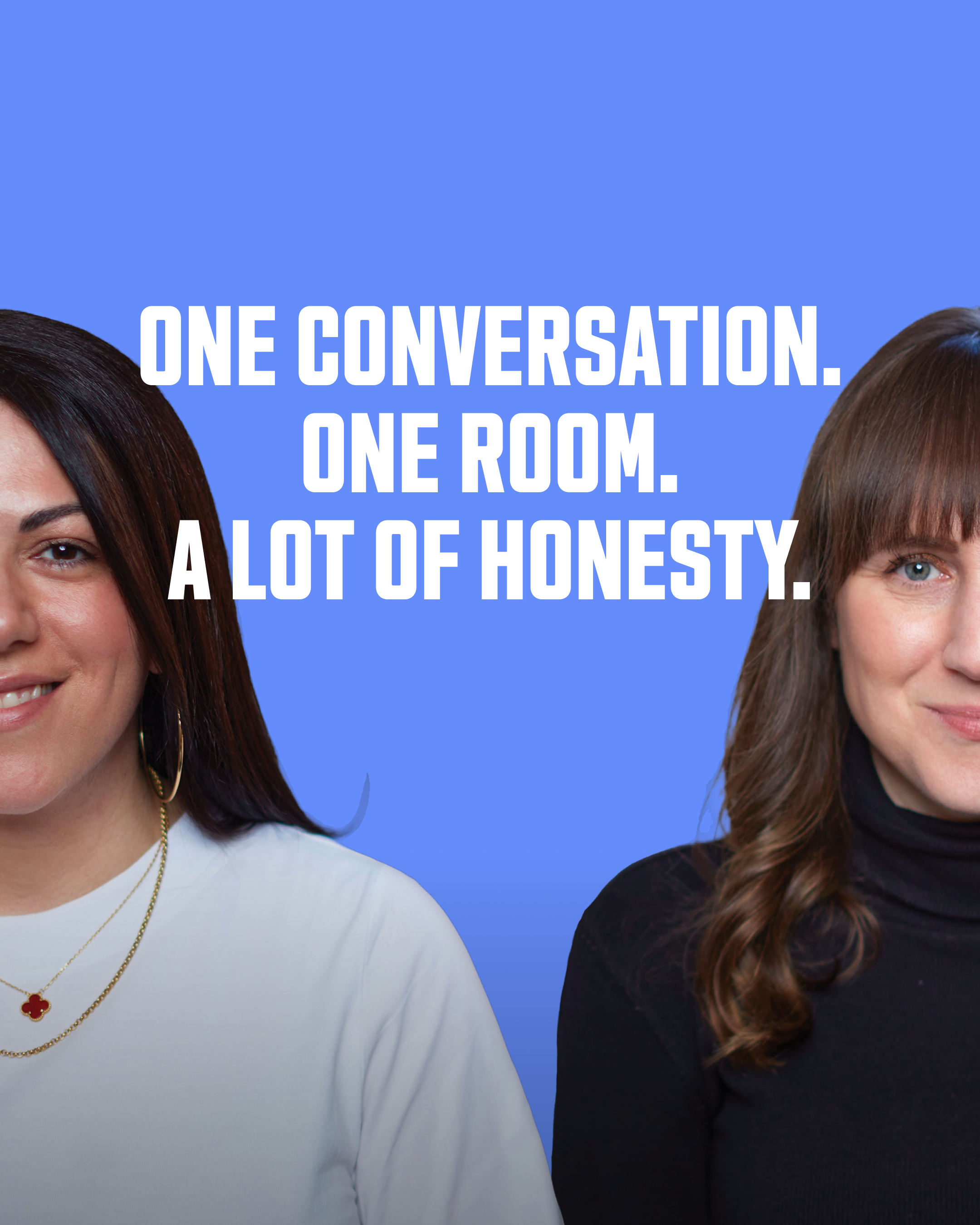
Sometimes the most useful conversations happen when the room gets more intentional. At Transform magazine's inaugural House of Brand Transformation at Cannes Lions this summer, we sat down with two women who choose to lead differently: Miranda Mitchell, Founder of Barbette, and Mabel Adeteye, Head of Brands & Communications at Wema Bank and a member of the Cannes Lions 2026 Jury. We talked about why the so-called ‘softer’ qualities women so often bring to leadership– characteristics like care, candour, collaboration and perceptiveness– are in fact powerful commercial advantages that frequently create the conditions for better work, stronger partnerships and more resilient businesses.
Our way of working at Ladyship is built around three core principles: Craftsmanship, Partnership and Leadership. These are the daily disciplines that guide how we listen, challenge ourselves and each other, and make decisions. In the conversation, these three principles became a way into a bigger question: what do businesses need most right now?
In a market being reshaped by AI, speed, burnout, bias and the constant pressure to produce more, the answer may not be leadership that’s louder or faster. It may be that those who know how to stay close to what matters most– people, craft, the process– have the real edge.
Craftsmanship is a Journey
It’s not uncommon for craft to be mistaken for the polish that gets applied once the strategy is set. Miranda and Mabel made the opposite case: craft is a practice that begins at the start of a project. It’s awareness, listening, discernment and refinement, carried all the way through from briefing to wrap-up.
This distinction matters because many businesses are built around the pressure to skip straight to output. We’ve all been there at some point in our careers: produce the deck, ship the campaign, answer the brief. But all that messy, yet necessary, work of figuring something out before you rush to make it visible is usually where the greatest value of craftsmanship gets unlocked.
For Miranda, that process starts with the audience. “Craft starts with understanding the community you're targeting,” she said. “Big decisions still get made without a consultative process and you can tell. Some campaigns get it badly wrong because nobody paused to ask who they were actually speaking to. You have to understand your audience before you begin. The data will lead you to the right decisions, the right channels and the right parts of culture to connect to. That respect for your audience is where craft starts. Once you have it, you can build something incredible.”
When talk turned to AI, Mabel offered a hard truth: you can’t automate depth you haven’t built. “Even when you have every tool available to you, if you don't know how to use it, it doesn't matter,” she said. “Because of AI, you start seeing the same thing over and over in storytelling and messaging. But when you have first-hand experience, you can see between the lines. That’s why you can't overinvest in understanding your craft. After all, you can't give what you don't have.”
This continual honing of craft is a tension Ladyship thinks and talks about often. For us, the real risk AI poses to craft is that it produces plausible work fast enough that it stops people asking what truly good work requires in the first place. It takes bravery to pause, think, and apply rigour to whatever you're doing when the pace around us all is moving at such velocity.
We embrace the tools available to us at Ladyship. We just don't confuse them with craft. After all, a tool is only as good as the judgement behind it and judgement is not something you can prompt your way into. And in a world overflowing with fast, finished-looking work, that discipline separates the work that lasts from the work that simply launches.
Partnership Needs Oxygen
Everyone claims to want a true partnership between client and agency. Miranda and Mabel got down to brass tacks about what that really requires: trust, timing and the willingness to let go.
“None of us is an island,” Miranda said. “The success of what you deliver depends on layers of partnership. People buy other people. If you're already connected before you ask for something, it makes all the difference.”
Having built a deep career across ad and PR agencies, she's seen what happens when work is genuinely integrated. As the partnership stakes rise, so does the need to compromise. “That's what breathes oxygen into an idea,” she said. “It goes out into the world in a far better way than if you'd kept it wrapped tight in isolation. I believe in giving oxygen to everything– to ideas, to how you lead, to letting other people have space. Because then the universe gives you surprises you could never have thought of.”
Mabel brought the client's point of view after years of sitting on both sides of the table. For her, partnership means collaboration that extends beyond the brief. “I need to know my agency can deliver, and that they're seeing things beyond just satisfying me as the client,” she said. The relationships that last, she added, are built on ownership: “A great agency should see the brief as something with their name behind it. When you can put your name behind the work, that’s when you get the most out of people.”
That sense of ownership extends to how a partner challenges their client, too. “You can't force people to take an idea," Mabel noted. "But you can help them see the direction, based on your expertise. That's why you were hired.”
Partnership, in other words, isn't just about proximity but the willingness to let an idea breathe and the trust to let someone else help shape it. We built our own team at Ladyship with this principle in mind, creating a strong set of specialists curated and trusted to own their piece, given room to do what they do best. That's oxygen at work.
Leadership is an Attitude
No leader has every answer. What separates the ones people want to follow is what they do with not knowing. The best leaders create the conditions for other people to contribute, experiment, grow and succeed. They know when to guide, when to get out of the way, and understand that leadership is not about controlling every outcome, but about giving room enough for the right ideas, talent and confidence to emerge.
For Miranda, that's where optimism comes in. It's a way of holding uncertainty without letting it show. “You can't know every answer, even when you're the one in charge. But you can be comfortable with not knowing. It's more an attitude than an answer, and that attitude is what people look to.”
Her own leadership style carries the same principle she brings to partnership: give it space. “I'm not big on micromanaging,” she said. “If someone's hired to do a job, let them do it. They might surprise you. Leave space for serendipity, for what could happen– not just what's written in a PowerPoint no one looks at again."
Having spent years inside large global networks, she's seen how even titles like Managing Director don’t guarantee the autonomy that enables leading with optimism. “That's partly why people, especially women, decide to become founders,” she said. “Fitting into a rigid box of how you're meant to lead– driven purely by profit– rarely sits well with people who actually care."
Mabel's leadership runs on a different engine: fulfilment, which she emphasised is earned through building-up other people's capacity. “You have to be able to pre-empt a crisis,” she said. ‘When you're coming up with ideas and solutions, you need objectivity to make the right call, on the spot.” But objectivity is only half the job. The other half happens after the decision gets made. “You know real fulfilment when you nurture talent and ideas,” she said. “When I meet you, at any level, I want to see the impact I'm creating in your life. The work is demanding, yes, but so much energy comes from watching the impact you're making and how you keep finding ways to help people grow.”
Two different leaders, two different instincts. Yet both arrive at the same place: leadership is about attitude, not answers, and how successful you are as a leader depends on how much you invest in the people trying to figure it out alongside you.
Built Different, On Purpose
Craftsmanship. Partnership. Leadership. On their own, they can sound like principles any business might claim. Together, they harness a strong and distinctive operating model for how great work gets made.
None of this happens by accident. It takes discipline, patience and the confidence to work in ways that don’t always look obvious from the outside. As our panel illuminated, women often build differently when given the freedom to do so. We stay close to our audiences, create room for ideas and people to grow and measure success by what we build in others. That’s what ‘built different’ means to us. And at Ladyship, it’s simply how we do business.
Originally published as part of Transform Magazine’s Cannes coverage. Watch the full conversation via Transform Magazine’s YouTube channel.
