
Building Ladyship
The Story Behind The Brand
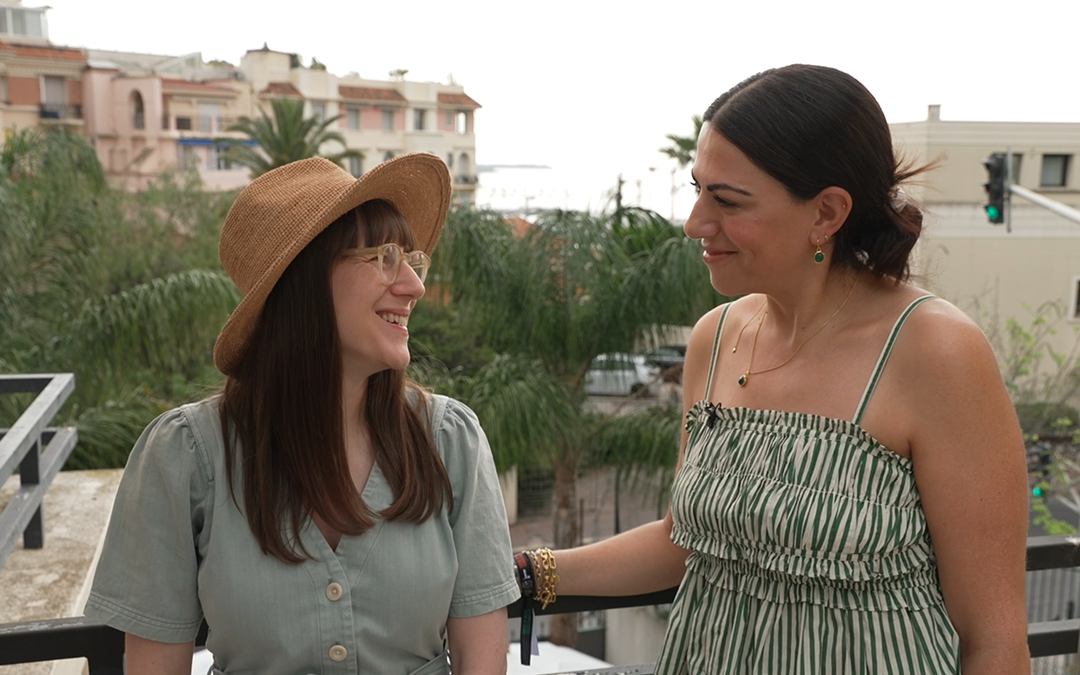
In an industry built around pitch theatre, hierarchy and transactional relationships, Ladyship is actively proving something different. We believe that when you build a business around trust, senior talent and the realities of what people actually need to thrive and feel good in their work and life, you create the conditions for better business. In our interview with Jack Cousins from Transform magazine at Cannes Lions 2026, we shared a behind-the-scenes look at how we built Ladyship and what ‘different’ looks like in practice.
On Candour
Our tagline– because you don't need another yes man– might sound provocative, but it gets at the heart of what Ladyship’s all about. We have enormous respect for the industry we work in, but we also see an opportunity to challenge some of the dynamics that have become accepted as standard.
Clients invest in an agency because they want great strategy, positioning and creativity. But, as we heard during our panel discussion earlier that same day, they also need a partner who will be honest with them, even when honesty makes the conversation tougher.
“In our creative services world, agencies are constantly trying to get the client to be happy, delivering against the budget or trying to get more budget,” Rana pointed out. “It’s very transactional. With Ladyship, clients are going to get real talk. We’re going to have the conversations that are sometimes going to be uncomfortable but, at the end of it, we’ve got your back. We’re going to push you and challenge you. It won’t always be yes.”
We see candour as a form of commitment rather than confrontation. After all, candour means caring enough about the client, the challenge and the outcome to say what needs to be said and working together until we reach the right resolution. Because the strongest partnerships are built on the trust to be able to say what matters when it matters most.
On Operational Intention
When we started Ladyship, we knew that we weren’t going to build our company by taking a conventional agency model and simply slapping our branding on it. As Rana said: “We had an opportunity to design and build a business in the way we wanted it done. That meant being globally connected, remotely structured and able to handpick senior talent for every project.”
That sense of intention shows up in the large decisions we make as well as the seemingly smaller ones that still have a big impact on the way we work. “We also show up in other intentional ways,” said Jemma. “We work a four-day week, which is hugely important to us. Women carry a lot of extra mental load and physical load, so it was important to both of us that we created space for that.”
With a talent network spanning London, various countries in Europe, New York City and the West Coast, a typical working day at Ladyship has a natural breadth and pace. Protecting people’s time and intentionally building that time into our operating system isn’t something we see as an added benefit. It’s a key aspect of keeping our business model sustainable. As Jemma said: “We protect that space so that we can show up Monday to Thursday and be really on point. It makes a huge difference for all of us.”
On Talent
We don’t call the people we work with employees. We call them talent.
“Our talent is our worth,” noted Rana. “And that’s something to really be celebrated. In our past agency lives, that was never really nurtured and invested in– the executives got the big cheques while everyone else did the work.”
“That’s why we don’t argue when it comes to what our talent is worth,” Rana continued. “And, after all, when businesses invest in agency partners, they want that investment to go into the talent that’s crafting the work– not the office building and other overheads and infrastructure. We want more of that investment to reach the people actually thinking about, making and crafting the work.”
Valuing talent also means recognising that people rarely fit neatly inside a job description. For example, our former project manager, Alicia, wanted to try something new. It turned out that she was a natural at marketing and internal culture, with fantastic skills in photography and user-generated content. We celebrated her choice to do something different and now she runs our channels and marketing.
“We don’t put people in a pigeonhole,” said Jemma. “The people we work with bring multiple dimensions. It’s not, ‘I do this job, I come in nine-to-five and I leave’. There’s always real passion.”
As leaders, we see time and again that when people are trusted to bring more of themselves to their work, the business gets more of their imagination, curiosity and capability in return.
On Creating a Village
Something unexpected happened once we landed on calling the business Ladyship. People weren’t just joining our projects. They were joining in by contributing ideas, sharing skills and giving more of themselves without being pushed or managed into it.
“The name Ladyship seems to have this rallying cry around it,” Jemma said. “It’s this unspoken drumbeat. It’s almost like we’ve created this magnet, and people just want to give more. We don’t ask it of them. It’s just people showing up authentically and wanting to give all that they have to give.”
And while Ladyship’s network of talent is predominantly female, it’s never been defined exclusively by gender. As Rana pointed out: “There is ‘lad’ in Ladyship. We have guys who work with us, too. It’s less about gender and definitely more about the attitude and mindset that a person brings to the table.”
For a long time, women and men have been conditioned to accept rigid ideas about agency dynamics, leadership and the way creativity should be organised and nurtured. Ladyship is an attempt to loosen those tight structures and make room for something more human.
As Jemma put it, society has moved away from the shared goals and mutual support once found in villages and towards increasingly siloed lives.
“What we’ve done is create this community and the space in it for people to really show up as their best selves,” she said. “We’ve built a village.”
On Impact Strategy
Intentionality also shapes how we think about our impact beyond the immediate work.
“We purposefully support female initiatives and handpick who we donate to every year,” explained Jemma. “But it’s not a one-and-done checkbox. We want to remain active and responsive to emerging issues rather than treating impact as a fixed annual exercise. For example, when we became concerned about the amount of water being consumed by AI data centres and the consequences for nearby communities, we sought out organisations working to replenish local water supplies.”
We know that as new technologies and solutions emerge, our response may change too. Rather than choosing a cause once and repeatedly pointing towards it, we think there’s more value in continuing to pay attention, ask questions and act where the business can make a meaningful difference.
On Backing Yourself
When Jack asked us what advice we would give to younger people entering the industry, Rana’s answer was simple: “Back yourself.”
We see backing yourself as understanding your own value deeply enough that you don’t need to imitate someone else’s way of thinking, creating or leading. “In order to back yourself, you have to really know yourself,” she continued. “You have to know what makes you unique and lean into that. Delve deep! No one should pretend to be someone else, that’s exhausting.”
Jemma jumped in with a complementary perspective. “For me, it’s about being more vulnerable,” she said. “Just be open. Ask for help. If you don’t know what your toolbox is, build it and then put the tools in it as you go.”
Those tools might relate to craft, confidence, wellbeing or something else entirely. What matters is knowing yourself well enough to recognise what you need and backing yourself enough to go and build it while expanding what you’re capable of.
On Doing Things Differently
The balance that we’re describing here is a key part of what sits at the centre of Ladyship. We wholeheartedly believe that confidence can coexist with vulnerability, seniority with openness and ambition with care. Doing things differently is a standard we build into the business and we take it one decision, one opportunity and one person at a time. Because when people are given the trust, space and support to become more fully themselves, they raise the bar on what’s possible for the work, the business and for everyone around them. That’s how a different kind of agency gets built.
Originally published as part of Transform Magazine’s Cannes coverage. Watch the full conversation via Transform Magazine’s YouTube channel.
